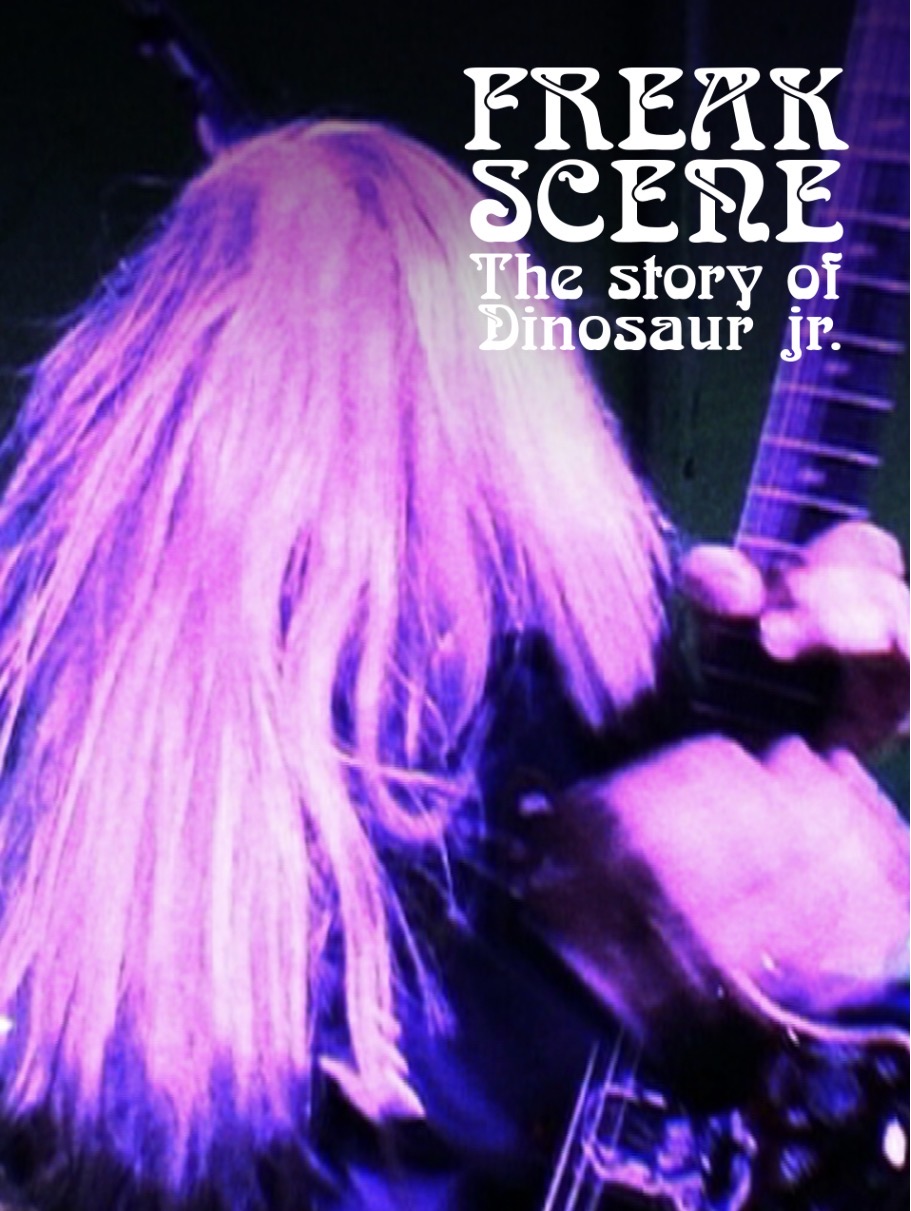
Freakscene: The Story of Dinosaur Jr.
Featuring: J Mascis, Lou Barlow, Murph
Documentary: 2021 | 86 minutes
Rating: ★★★★☆
Some rock documentaries are built around excess. Others are about tragedy, fame, drugs, money or spectacular breakups. Freakscene: The Story of Dinosaur Jr. has plenty of conflict, but its real subject is something stranger: three musicians who have spent decades struggling to communicate with one another while somehow communicating perfectly when they play music.
That contradiction is at the heart of Dinosaur Jr.
Directed by Philipp Reichenheim, also known as Philipp Virus, Freakscene traces the band from the Massachusetts underground of the 1980s through its original collapse, J Mascis' continuation of Dinosaur Jr. without the original lineup, and the eventual reunion of Mascis, bassist Lou Barlow and drummer Murph.
Anyone familiar with Dinosaur Jr. knows that this was never exactly a band built on friendship and healthy communication.
Mascis remains one of rock's great reluctant frontmen. He speaks slowly, rarely seems interested in explaining himself and often gives the impression that talking about Dinosaur Jr. is considerably more difficult for him than simply plugging in a guitar and turning the amplifier up.
Barlow is almost his opposite. He's emotional, articulate and still clearly affected by what happened within the band. Murph sits somewhere between them, providing another perspective on a group whose chemistry often seemed impossible.
And that's what makes Freakscene fascinating.
The documentary doesn't attempt to turn Mascis into a conventional rock star. If anything, his awkwardness becomes one of the movie's best qualities. There is something wonderfully funny about watching people describe one of the most influential guitarists of his generation while Mascis himself seems mildly uncomfortable with the entire idea.
The film also makes a convincing case for just how important Dinosaur Jr. really was.
Long before alternative rock became commercially dominant, the band had already discovered a combination that countless groups would explore later: punk-rock energy, enormous guitar distortion, surprisingly beautiful melodies and Mascis' Neil Young-like guitar solos soaring above everything.
The documentary brings in an impressive collection of musicians to explain that influence, including Kim Gordon and Thurston Moore of Sonic Youth, Bob Mould, Henry Rollins, Frank Black and Kevin Shields. Their enthusiasm helps put Dinosaur Jr.'s place in alternative-rock history into perspective.
But thankfully, Freakscene isn't simply 86 minutes of famous musicians telling us how important Dinosaur Jr. was.
The old footage is the real treasure.
Grainy performances, backstage clips, photographs and television appearances capture a time when alternative music still felt genuinely underground. The rough presentation actually works perfectly for Dinosaur Jr. A glossy, overly polished documentary about this band would almost feel dishonest. Freakscene looks and sounds like something discovered in a box of old VHS tapes, which suits the subject beautifully.
Then there is the Lou Barlow story.
Barlow's dismissal from Dinosaur Jr. remains one of the band's defining moments, and the documentary doesn't pretend that everything between Mascis and Barlow was simply a harmless misunderstanding. Their relationship was complicated, occasionally cruel and frequently dysfunctional. Barlow's eventual departure after Bug, followed later by Murph's exit, left Mascis carrying the Dinosaur Jr. name until the band eventually ended its original run. The three founding members finally reunited in 2005.
What makes the reunion meaningful isn't that these three suddenly became best friends.
They didn't.
Instead, they apparently reached an understanding that might be more believable. They got older. The anger cooled. Certain wounds healed enough for them to recognize that whatever problems existed between them, something extraordinary happened whenever the three played together.
That gives Freakscene an unexpected emotional weight.
There is no giant Hollywood reconciliation. Nobody delivers a dramatic speech about brotherhood. Dinosaur Jr. wouldn't be Dinosaur Jr. if they did.
They simply play.
And when Mascis' guitar erupts over Barlow's bass and Murph's drums, suddenly all of their personality differences make sense. This was always a band that communicated better through noise than conversation.
The documentary isn't perfect. At only about an hour and a half, decades of history move quickly. Several periods deserve considerably more attention, and viewers hoping for a detailed examination of every album, lineup change and backstage dispute may come away wanting more. Other reviews have similarly noted that the film paints the band's history in fairly broad strokes.
But maybe that's appropriate.
Dinosaur Jr. has never been a band that explains everything.
Freakscene understands that.
Instead of solving the mystery of J Mascis, Lou Barlow and Murph, it allows the mystery to remain. These are three very different people who probably shouldn't have lasted together for a few years, much less returned decades later.
Yet somehow they did.
For longtime fans, Freakscene is filled with wonderful archival footage and reminders of just how revolutionary Dinosaur Jr.'s combination of melody, volume and distortion once sounded. For someone unfamiliar with the band, it's an excellent introduction to one of the crucial links between American underground rock of the 1980s and the alternative explosion that followed.
Most importantly, the documentary understands the one thing that has always mattered most about Dinosaur Jr.
Turn the guitars up.
Everything else will work itself out.
